

As Artificial Intelligence (AI) evolves in the digital world, it has created a love-hate relationship in the context of journalism, ranging from ethical issues to man-made media.
Various media workers had mixed reactions in the usage of AI for mass communication especially when it comes to handling critical and sensitive information.
According to researchers Peter Amponsah and Miracle Atianashie, Artificial Intelligence was used in journalism in the mid 2000s and 2010s, as it is being used for algorithms to tailor information to the public to enhance engagement and relevance.
In the research of Beatriz Gutiérrez-Caneda, Carl-Gustav Lindén and Jorge Vázquez-Herrero, the progressive use of AI in journalism had brought changes in journalists’ routines and profiles, but it had also raised ethical concerns and challenges especially in fact-checking information, data biases, human supervision and job losses.
AI in Fact-checking Works
In a discussion at the Brussels EDMO Annual Conference in May 2024, experts underscored AI's dual role in fact-checking as it helps trace narratives, spot patterns, and verify claims while still requiring human oversight for accuracy.
In a research by Taiwo Agunlejika of the Avant-Garde Research Institute, artificial intelligence is being used in fact checking as generative AI helps process claims faster.
“AI-driven fact-checking improves speed and accuracy, easing the workload on human fact-checkers.” Agunlejika said.
However, he added that biases, lack of transparency, and difficulties in interpreting nuanced claims remain a 'challenge'.
A hybrid approach, combining AI automation with human oversight, is recommended,” he suggested.
In addition, VERA Files, a fact-checker organization in the Philippines, found in their study that respondents wish AI tools would be ‘more sophisticated’ in detecting deep fakes or AI-generated photos—something that reverse image search engines are unable to do.
Personalized Truth to the Public
In an article entitled Algorithmic people-pleasers: Are AI chatbots telling you what you want to hear? The team of Article 19 tested the bias-reinforcement pattern of AI chatbots by asking questions about media biases about the American publication, the New York Times.
By asking neutral questions, the artificial bot provided balanced factual information about the publication’s history, reach, and reputation.
However, once the team started including 'subtle biases' in their questions, such as ‘Isn’t the New York Times known for its liberal bias?’ The bot started to highlight its controversies and criticism from Conservative voices in the United States.
Authenticity in Context
On August 2, the Manila Bulletin posted an editorial cartoon generated by AI with the prompt included in the caption where Veteran cartoonist 10-year cartoonist Allen Inocencio criticized that the AI-generated work was 'embarrassing, with a weak and outdated concept'.
He also pointed out that cartoonists are not 'robots', since they have unique ways of developing ideas based on opinion and research, and described it as 'shameful' for AI to be used even in delivering the news.
Meanwhile, the British Broadcasting Corporation (BBC) has also introduced AI to automatically generate subtitles, expanding access to news content for hearing-impaired audiences.
Reface, not to replace
In the Howie Severino podcast entitled, AI and Journalism — a convo with Karol Ilagan, a journalism professor from the University of the Philippines (UP) and a journalist and researcher from Philippine Center for Investigative Journalism (PCIJ), Ilagan mentioned that AI may have an 'impact' on journalism work and other professions.
“[ChatGPT] he's generative, [it] he can produce content. That's why he became controversial because he can produce content that's like us when we produce content too,” Ilagan said as she shared her previous conversation with PCIJ journalist and technologist Jaemark Tordecilla, about the different applications of the online tool.
On the other hand, Ilagan described herself as 'cautiously optimistic' as she noted how to investigate and hold AI systems accountable.
Meanwhile, the podcast host emphasized using AI as an aid, while continuing to have humans produce and review the accuracy of the works.
“So at least, sa larangan namin 'yung paggamit ng AI ay wala pa rin nawawalan ng trabaho. But currently it's just helped in our production.” Severino shared.
News
In-Depth News
The double-edged role of AI in journalism
As Artificial Intelligence (AI) evolves in the digital world, it has created a love-hate relationship in the context of journalism, ranging from ethical issues to man-made media.
· 3 min read

–views
18.4
How did this story make you feel?
Be the first to react · no sign-in needed
More from News

Filipino
Pilipinas, kulelat sa English Communication skills — CHED Chair
Francis Owen Romano · Sep 18, 2025 · 2 min
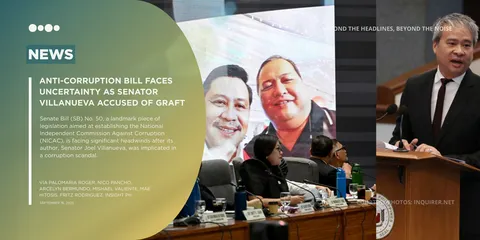
Anti-Corruption Bill Faces Uncertainty as Senator Villanueva Accused of Graft
Palomaria Roger, Nico Pancho, Arcelyn Bermundo, Mishael Valiente, Mae Hitosis, Fritz Rodriguez · Sep 16, 2025 · 2 min

UN Report: North Korea Executes Citizens for Watching, Sharing Foreign Media
Nico Pancho · Sep 15, 2025 · 1 min
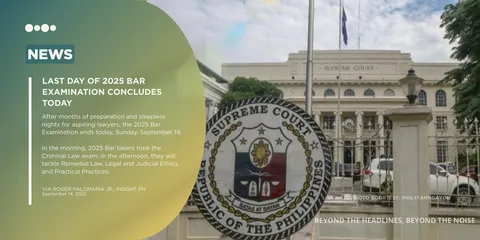
Last Day of 2025 Bar Examination Concludes Today
Roger Palomaria Jr. · Sep 15, 2025 · 1 min
Email news
Get the stories that matter, straight to your inbox.
Breaking news, a daily digest at 7:00 AM, or a Sunday round-up. English, Filipino, or both. Unsubscribe anytime.
Comments
Be civil. Read the Comment Guidelines.
Loading comments…