

A dam is supposed to be a stronghold. A towering assurance that water, no matter how wild, can be contained. But lately, it feels more like a ticking time bomb covered in concrete and cement. Every time a typhoon or habagat comes knocking, our dams tremble not just from the force of water, but from the weight of the shortcuts made during their creation. Once it finally crumbles, it is not just water that floods but also the proof that negligence flows faster than responsibility.
On July 21 at 3 PM, Wawa dam reached its maximum water level after multiple days of non-stop rain from the southwest monsoon. Now, the dam is spilling over, flooding the Marikina river and putting many low-lying communities in danger. While the rain may be natural, the devastation is not. Behind every crack in the dams reveal the system that chose to save pesos but lose people.
We do not have a water dam crisis—we have a crisis of cheap infrastructure. Dams are supposed to protect, not threaten. But when the budget for materials is cut back, maintenance is shrugged off, and oversight is buried beneath bureaucracy, these structures become liabilities. What happened to the wawa dam today is not an act of nature but rather the consequence of decisions made by people trying to cut costs.
It is not just Wawa. From Magat to Angat, we have normalized spillovers as part of the rainy season. Scratch that—we learned to expect it. We even memorized the pattern of the rain pouring, the dam getting filled to the brim, the water getting released and then the low-lying communities paying the price. The real data is not in the rainfall but in how often we pretend this is normal. This is not just about climate change anymore but about how our country still continues to build lifelines that collapse when they are needed the most.
Officials will say that nature is unpredictable. That we should just understand the complexities of the rainy season and that it was well beyond human control. But is that not what dams are for? To control what we cannot? If a single week of continuous rain is all it takes to bring us to the breaking point, then why are we even building them in the first place? These are not just acts of God. They are acts of negligence, created by people and signed by people. The problem is not just the volume of the water. It is also the volume of excuses that we have learned to accept.
We need to stop treating floods like they are inevitable and start treating accountability like it is non-negotiable. Dams are not supposed to be betting chips that we should gamble on. We either build them right or we build them again—nothing in between. People’s lives are in danger if we allow this inadequacy to continue further. We need audits, reinforcements, and actual planning that does not end at the press release. We need accountability before the next typhoon strikes, not plans on how to console people.
Wawa is overflowing—but it is not just water crashing down. It is every neglected repair, every rigged bid, every oversight that got swept. This is what happens when we wait for things to break. The flood is not just the crisis. The real crisis is how long we have known that the cracks were there and still let it reach this point.
Column
Cracks in the Current
When the budget for materials is cut back, maintenance is shrugged off, and oversight is buried beneath bureaucracy, these structures become liabilities. What happened to the Wawa dam today is not an act of nature but rather the consequence of decisions made by people trying to cut costs.
· 3 min read

–views
18.4
How did this story make you feel?
Be the first to react · no sign-in needed
More from Column

Laughing While Lives Are Ruined
Alleya Naveros · Jul 22, 2025 · 2 min

Education Needs Nutrition, Not Corruption
Drew Ezekiel Diamsay · Jul 23, 2025 · 4 min
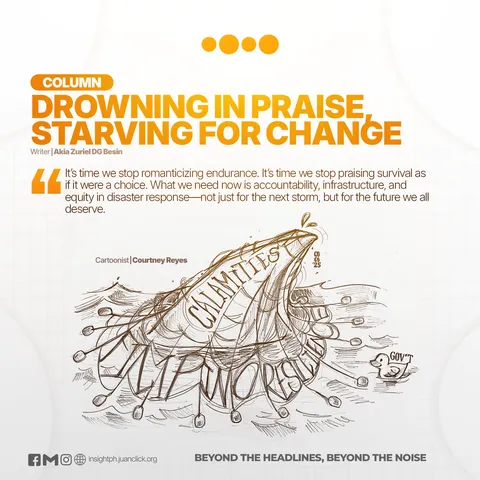
Drowning in Praise, Starving for Change
Akia Zuriel DG Besin · Jul 24, 2025 · 3 min
Bylines, Bye Lives
Sofia Dela Peña · Jul 25, 2025 · 2 min
Email news
Get the stories that matter, straight to your inbox.
Breaking news, a daily digest at 7:00 AM, or a Sunday round-up. English, Filipino, or both. Unsubscribe anytime.
Comments
Be civil. Read the Comment Guidelines.
Loading comments…